
Complex and surgical cases · San Luis Obispo & Arroyo Grande
We look for the least invasive route first.
Some jaw problems are skeletal and surgery is genuinely the right answer. Others can now be treated in ways that weren’t possible fifteen years ago. Dr. Garrett’s job is to work out which one you’re looking at, and to tell you plainly.
San Luis Obispo 805.544.3223 · Arroyo Grande 805.489.4625
The problem
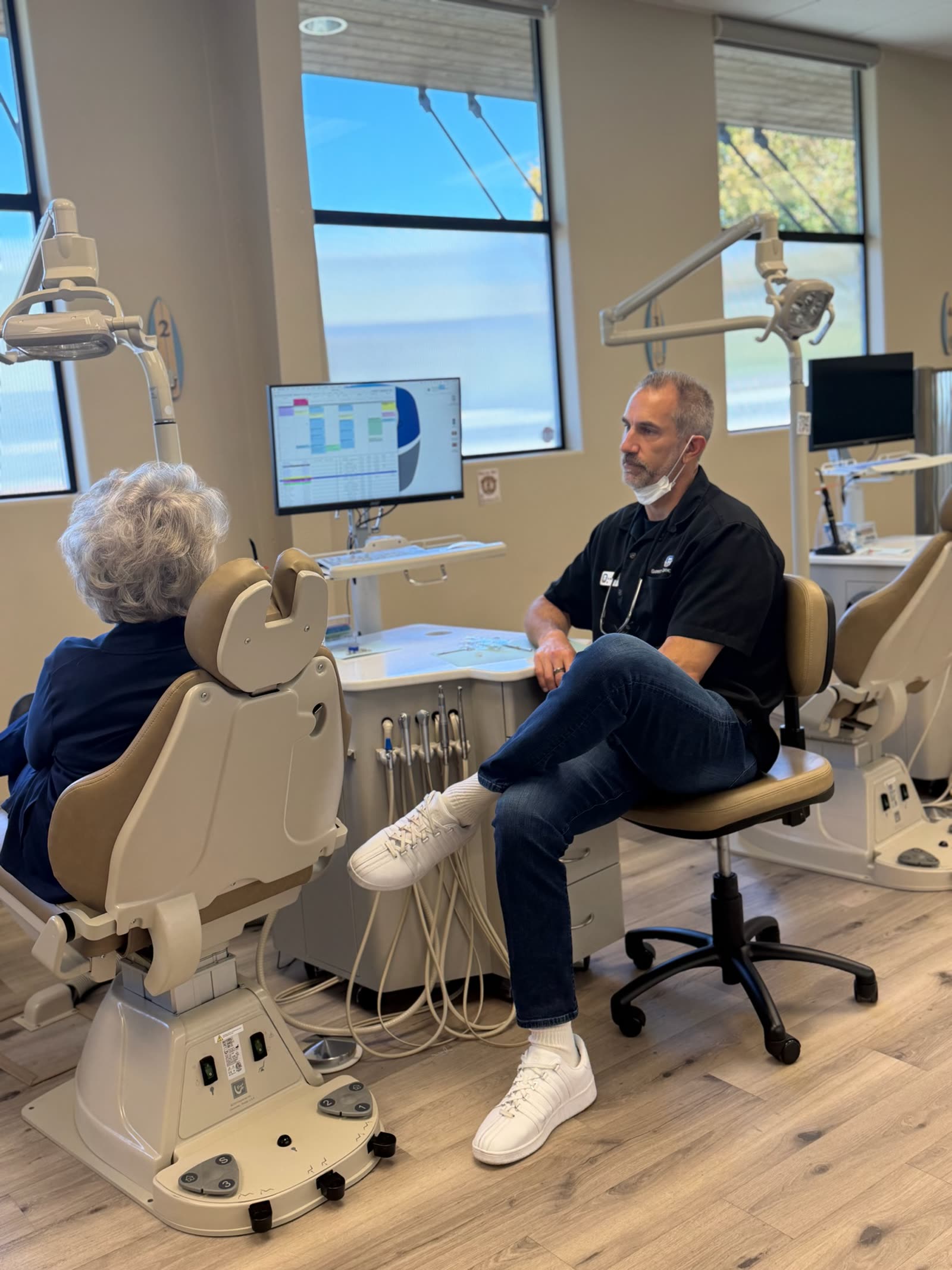
A complex bite deserves more than one look at it.
“Knowing that I was to have jaw surgery was kind of scary.”
— Braces patient“Jaw surgery in itself sounds really scary.”
— Braces and jaw-surgery patientA jaw that doesn’t line up is the hardest thing in orthodontics to plan well. The teeth are only part of it: there’s the skeleton underneath, the joints, the airway, and how all of it is going to change over the next few years.
What you want is somebody who has spent his career getting better at exactly this, who has the imaging to see the whole picture, and who will walk you through every route on the table before you commit to any of them.
The question Dr. Garrett asks first
The question that starts every complex case.
“Is surgery one of the options, but is it the option? We always look to see if there’s an alternative.”
— Dr. Brett GarrettSometimes there isn’t one, and you’ll be told that early rather than find out a year in. But a bite is a three-dimensional problem, and what the assessment can see has changed a great deal.
The technology behind that answer
He has invested in seeing more before deciding anything.
The reason the question is worth asking now is that the tools have moved. Dr. Garrett has spent years adding capability to this practice, and each piece of it widens what can be planned without an operation.
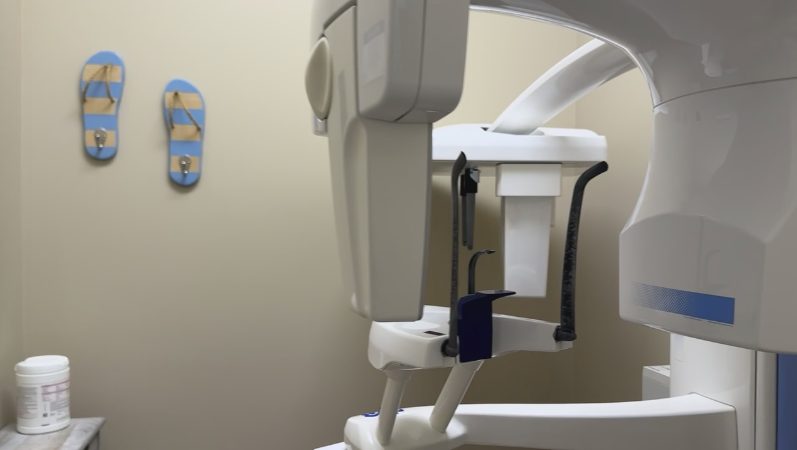
3D imaging before anything is decided
Garrett was one of the first practices on the Central Coast with a 3D cone beam X-ray machine. It shows the jaw joints, the bone and unerupted teeth in three dimensions, where a flat film shows a shadow.
Anchor screws
Small temporary screws give a wire something solid to push against, which allows tooth movements that used to require headgear or an operation.
Clear aligners for bite correction
Aligner therapy has moved a long way in a decade. Dr. Garrett was in early, sitting on Invisalign’s doctor panels while the system was still being developed, and now treats more aligner cases than braces. Invisalign →
Expansion, while there’s growth left
In children and teenagers, widening a narrow jaw early can change what the adult case turns into. Early treatment →
An in-office laser
Where a tooth hasn’t come through, it can often be uncovered here rather than referred out.
A patient who came in expecting surgery.
A young adult came in with a severe open bite, his front teeth didn’t meet at all. He’d already seen several providers, and surgery was the plan in front of him.
Dr. Garrett asked him a question nobody had: did he want surgery? He didn’t. So they tried clear aligners first. Within two visits the bite had closed halfway. After five appointments he was finished, and he could chew.
One case, and what it isn’t.
This is one patient’s result, and it is not a verdict on anyone else’s plan. Open bites vary enormously and many of them do need surgical correction. Surgery was a reasonable recommendation for this case. What it shows is that the question is worth asking out loud, not that the answer comes out the same way twice.
When surgery is the right call
And he is the person you want coordinating it.
Some jaw discrepancies are skeletal, and no amount of tooth movement fixes a skeleton. When that’s the case, saying so early saves years.
Dr. Garrett works closely with both local and remote oral surgeons to design a treatment plan right for each patient. Collaborative cases are their own skill: the tooth movement has to be planned and finished before the operation, the timing has to line up with the surgeon’s schedule, and somebody has to hold the whole plan together from the first appointment to the last. That’s the part he does, and he stays with you through all of it.
You don’t get handed over and picked up again by strangers.
“Jaw surgery in itself sounds really scary, but when you have a team like this, it’s not scary anymore.”
— Braces and jaw-surgery patient“Not just doctor to patient, but more man to man.”
— Braces and jaw-surgery patient, on Dr. Garrett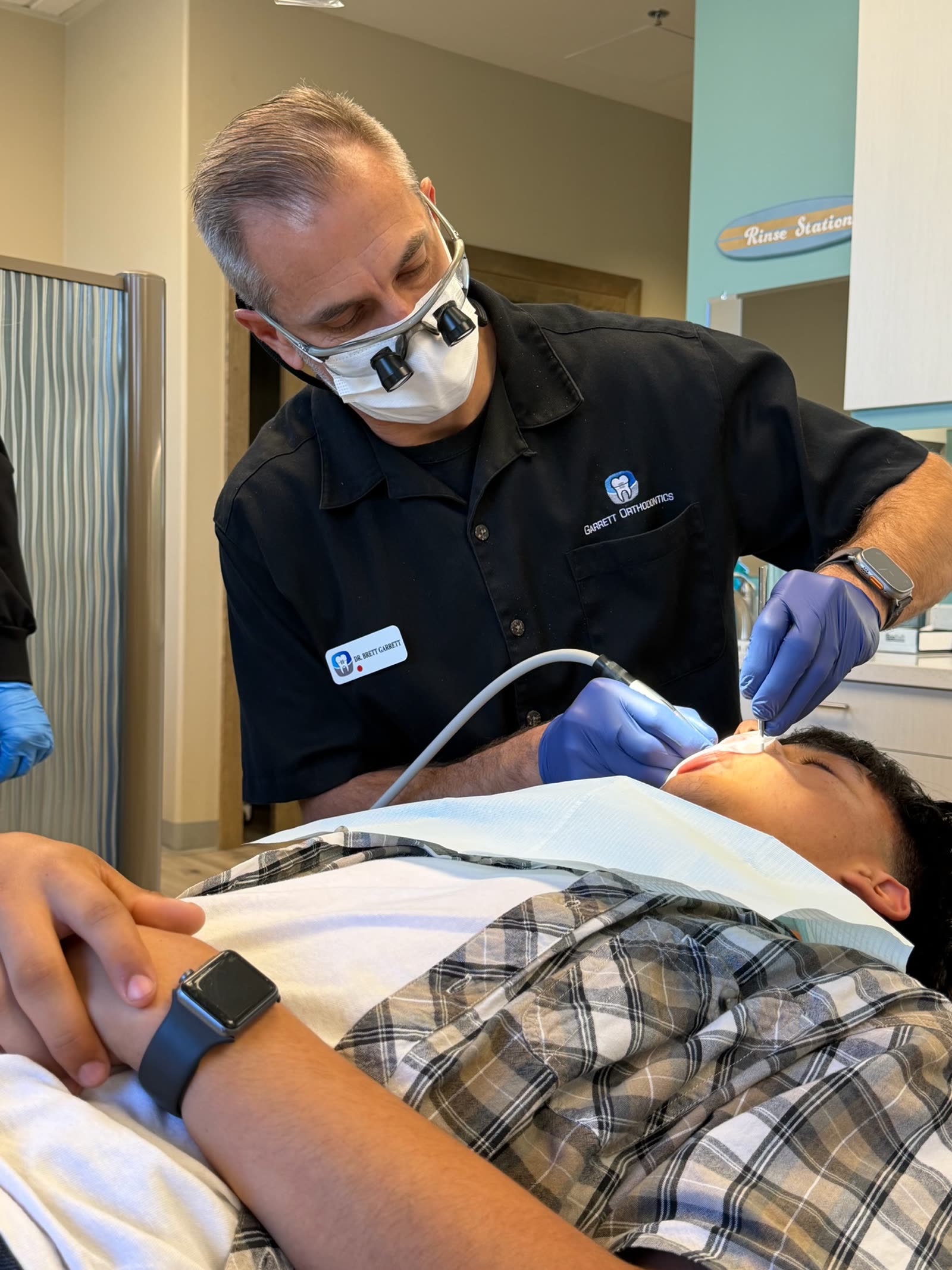
What we’d do at your consultation.
- 01
Look at what you’ve already been told
Bring the plan, the X-rays, the surgeon’s letter if there is one.
- 02
Take our own records
Including 3D imaging where the case calls for it.
- 03
Tell you what we see
Including when we agree with the plan you came in with. An opinion that always disagrees isn’t worth having.
- 04
Lay out the routes
With what each one costs and how long it takes.
What people say afterwards.
“My overbite was significant enough that I physically had to move my jaw backwards just to get my back molars to touch… Being able to just eat like a normal person.”
— Braces and jaw-surgery patient“My mouth would slip, and the fork would like cut into my lips.”
— Braces patientThat’s the half of orthodontics nobody advertises. It isn’t only how it looks. It’s a bite that works.
Results
See before-and-after cases
Real patients of this practice, photographed before and after treatment.
Smile gallery →
Questions people ask at two in the morning.
Do I need jaw surgery?
Nobody can answer that from a website, including us. What we can tell you is that it’s a three-dimensional question, and it’s worth having 3D imaging and a full conversation about the routes before you commit to any of them.
I’ve already been told I need surgery. Is it worth coming in?
Yes, and not because we expect to disagree. Sometimes we look at the same case and reach the same conclusion, and you go ahead knowing two orthodontists saw it the same way. Sometimes the imaging opens up a route that’s worth discussing. Either way you’ll know more than you do now.
Will you tell me I don’t need surgery just to keep me as a patient?
No. If surgery is the right route, saying so early is the whole value of the appointment.
Can you do the surgery here?
No. That’s an oral and maxillofacial surgeon’s work. Dr. Garrett plans the orthodontics around it and works with the surgeon throughout.
Which surgeons do you work with?
Local ones, and surgeons further afield when a case calls for it.
How long does treatment take if I do have surgery?
Longer than treatment without it, because there’s tooth movement before and after the operation. You’ll get a real timeline at the consultation.
Is it rude to get a second opinion?
It’s normal, and any orthodontist worth seeing expects it. There are good orthodontists in this area and you should feel free to see more than one of them.